Research topics
|
Our lab has two main lines of research - auditory attention (particularly spatial attention) and the study of relationships between auditory perception and action. The common denominator is the broad question of how other cognitive systems (attention, short and long-term memory, action) interact with sensory processing in the auditory system. This approach views cognition, and the brain activities that give rise to cognition, as highly interactive and dynamic, much like an ecosystem. Our recent collaborative work applies various types of artificial intelligence (AI) methods to (1) "read out" cortical spatial attention codes, and (2) to predict whether upcoming speech in people who stutter will be fluent or disfluent.
Auditory attention Our lab's work on attention centers around three basic features of attention. The first is getting attention to where you need it - Spatial Attention. The benefits of attention are often concentrated in particular regions of space. Some of our recent work uses EEG, electrical stimulation, and behavioral measures to map-out how auditory attention is spread out over space. Attention when you need it - Vigilance. Attention is limited in capacity over time as well as space, and we have recently studied how to prolong vigilance with electrical stimulation. Sometimes attention is captured when you don't need it - Conflict. A sound's location can capture attention even when spatial information is counterproductive to one's current goals. Space is fundamental and hard to ignore; we want to understand why. Perception and action - auditory and motor systems This line of work focuses on understanding the interplay between auditory and motor systems. Smooth coordination between sensory input and motor output is vital for speaking, singing, and playing a musical instrument. Our work so far has focused on speech preparation, and whether motor plans held in memory just before speaking influence how sounds are processed. We have also been doing basic science and translational work on people who stutter because problems in coordinating motor and sensory systems may be one reason for their disfluent speech. Funding We gratefully acknowledge support from: The National Institutes of Health The National Science Foundation The State of Louisiana Board of Regents Mitre Corp. San Antonio Medical Foundation University of Texas System Board of Regents STARs program |
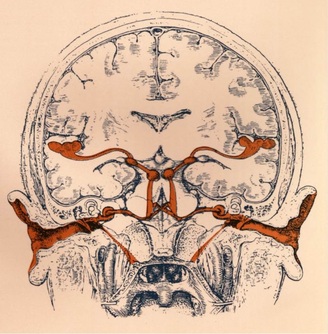
courtesy of Robert Shannon

|